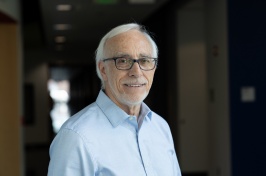
Profile in Sustainability: An Interview with Stephen Pesci, Project Director Campus Planning
April 2, 2008
Why is transportation planning an important piece of sustainability?
We all utilize the transportation system everyday – even if just walking
to campus. The options available to us and our subsequent choices have a dramatic
impact on energy consumption, emissions, the environment, and even the built
landscape we create. After housing and food, transportation is the next biggest
cost and energy impact choice for most households.
The best communities provide the freedom of cost-effective transportation
choices. UNH is special because we work as a community to find creative ways
to provide mobility choices for people without the exclusive need for the private
car. By doing so, we demonstrate cleaner and better ways to get around. I like
to think that’s a win for the environment, our campus, our transportation
budgets, the region, and even our individual health.
How can faculty, staff, students, and area community members be a part of
sustainable transportation at UNH?
By continuing to take advantage of the transportation options that Durham
and the region are lucky enough to have. For a small urban area, we have great
options – whether for biking, walking or taking the bus and train. As
a community we need to keep raising the bar and demonstrating our support for
these investments.
We’ve given people choices to save energy, emissions, and money at the
same time. The campus we build looks distinctly different than most places:
we can do that because of our transit and walkable development pattern. Next
time you are walking to your office or class from that bus stop, rail station,
or parking lot enjoy the scenery of our campus. Finally, get mobile - on a
bus, train, or bike.
What motivates you personally to be involved in sustainability?
Sustainability is an overarching mindset that has allowed me to stay in transportation
and planning and not be too much of a geek. Transportation systems are really
just a means of access to the more important settings we’re in – the
community – the region – the globe. I guess it allows me to reconcile
myself as explorer, citizen and advocate.