



















A Micro-Macro Thinker is Distinguished Professor
By Beth Potier, Media Relations
January 24, 2007
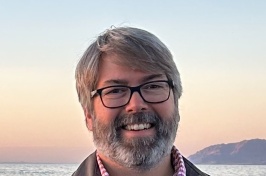
Photo: Lisa Nugent, Thomas G. Pistole with his children, James and Jennifer
On the three-legged stool of research, teaching, and service that comprises
faculty duties, Thomas Pistole has the most comfortable, best-balanced seat
in the house.
Indeed, asked to identify the high point of his 35-year career on the UNH
faculty, the microbiologist falters at the choice. He speaks about his research
in innate immunology and his efforts in service of the wider UNH community.
These range from serving on myriad committees to mentoring new faculty to creating
a Web-based course on research ethics.
And teaching? Pistole positively glows. “It’s hard not to say
the most exciting moments are the students I’ve taught,” he says. “Seeing
the ‘ahas’ through them—you just get the chills.”
Years ago, Pistole made a personal commitment never to compromise the teaching
side of his faculty duties—no mean feat in the research-driven world
of microbiology. He mentors graduate students not just in laboratory work but
in important research skills such as grant-writing. He helps students overcome
external barriers to success, from scheduling meetings around their child-care
needs to helping negotiate housing woes. He’s a fixture at UNH commencements,
whether or not one of his own advisees is being launched into the world. “I
always get teary-eyed,” he admits.
“He cares about everyone he works with—not just his own students,” says
former advisee Bochiwe Hara-Kaonga, who received her Ph.D. in 2002 and is finishing
a post-doc at Maine Medical Center. “He treats everybody with respect.” Once,
she recalls, Pistole lent her his own car so she could go to Dartmouth to use
a critical piece of lab equipment.
Pistole cares deeply about science as well as scientists. His work looks at
how the body defends itself against microbial aggression—the food-borne
pathogen salmonella in particular—before antibodies develop. Pistole
has toiled in this emerging field since his Ph.D. work at the University of
Utah, taking a leadership role as innate immunity gained legitimacy. Early
in his career, he was invited to be an associate editor of a major text in
his field, Progress in Clinical and Biological Research. “As a relatively
young faculty member, it was quite an honor,” he says.
His vita is crowded with publications, major research funding, editorial responsibilities,
and presentations, including a symposium he convened at an American Society
for Microbiology meeting that brought an overflow crowd, “even though
it wasn’t that year’s hot topic,” he says. While an upper-level
course on immunology remains the keystone in his teaching portfolio, the mercurial,
shades-of-gray world of scientific ethics has captured his intellectual imagination
for the past decade.
Pistole developed the course, Ethics and Issues in Microbiology, in 1995 to
help students grapple with issues such as cloning or stem cell research. “We’re
talking about things that don’t have a right answer. For scientists to
do that, it’s a stretch,” he says.
His involvement with that course led him to a national leadership role in
research ethics, which circled back to UNH when he, in collaboration with Julie
Simpson from the Office of Sponsored Research, developed a Web-based course
in responsible conduct of research for graduate students. The modules explore
major issues such as plagiarism or falsification. They also help graduate students
negotiate what Pistole calls minor crimes: “how you treat different students
in your lab, or how you might take a little information from a grant proposal
you just reviewed, or who should be the first author on a paper.”
“They’re minor,” says Pistole, “but they are the meat
of these issues.”
A proponent of balancing work with outside activities (“It gives you
this buoyancy, to go away and get energized”), Pistole is active in his
church and the Seacoast’s choral scene.
There’s one extracurricular activity, however, that holds no immediate
appeal: retirement. Says Pistole, “I just thrive in [the classroom] environment.
Being with the students is so exhilarating.”
< go back